Wednesday, March 20, 2013

The Gift of Gab...

I have a great aunt who can talk to anyone...I mean anyone.  She once called the telephone operator to ask for the exact time and ended up talking to her for more than thirty minutes!  I don't know if this story is actually true or just family lore, but the point is humans have an intrinsic desire to communicate with others.

I've written about my philosophy regarding authenticity on other blog posts (see The 'Barnes and Noble' Effect).  I am all about providing students with opportunities that mirror the behaviors of real readers and writers.  One such behavior is the need to verbally process information with others.  How many times have you finished reading a book and had an urgent need to discuss its contents with a fellow reader?  What about instances when you have asked for feedback or input on a piece of your writing?  It's natural to want to talk with others.  If this is true, then let's consider what this looks like in the classroom.

I read a recent tweet about how administrators can better communicate with teachers..."Listen more, talk less.  Two ears, one mouth for a reason."  I chuckled when I read it, but what a powerful statement wrapped up in eleven words!  SO powerful, in fact, that I think it can be generalized to other scenarios...like the classroom.  What if we challenged ourselves to talk half as much as we listened?  What if we provided more opportunities throughout the day for students to talk...to the class, to each other, to a small group, to us?  There's plenty of research that supports the importance of giving students ample time to talk in an effort to propel their learning forward.

Within the last year, I've had the opportunity to hear Sharon Taberski speak at a state sponsored professional development conference.   Of the many ideas she presented, I was most intrigued when she spoke about the significance of oral language development.  She shared the quote, "Oral language sets the ceiling on comprehension."  I've given a great deal of thought about the meaning of this and finally landed on the following:  If our ultimate goal is to teach students to comprehend proficiently...then we must provide them with plenty of time to talk.  In order for children to comprehend the texts they read, the language of the text must be familiar to them.  The only way to become familiar with language is to use it...

In 1995, Betty Hart and Todd Risley published Meaningful Differences in the Everyday Experience of Young America Children.  In this landmark study, Hart and Risley found an approximate 30 million (yes, I said, 30 MILLION!) word gap between three year olds from professional families and those from welfare families.  This study proved two things: 1) Quantity matters.  The more language a child hears, the more developed his/her oral vocabulary will become.  2) Quality matters.  Not only did children from professional families hear more spoken words than children from welfare families, but the language they heard was elaborative rather than restrictive.  (For more information specifically related to this study, check out the Reading Rockets Webcast From Babbling to Books).

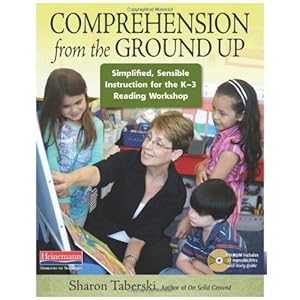
So what does a study about three year olds have to do with oral language opportunities in the elementary school classroom?  Well...everything!  Those three year olds will one day be in your kindergarten, first, and second grade classrooms.  If we generalize the results of this study, we can make the assumption that the 30 million word gap that existed at age three has probably increased.  What's more, Sharon Taberski states in her book Comprehension From the Ground Up, "...here's the sad irony.  In our current educational climate, we teachers, tired and stressed from all the curricular demands we've been handed in the name of raising students' test scores and reaching prescribed benchmarks, resort all too often to the very same restrictive language practices that occur in less advantaged socioeconomic households."

How can we transform our classrooms into language rich spaces where the teacher talks less and the students talk more?  Consider implementing the 'Think-Turn-Talk" strategy.  Julie Adams (@adamsteaching) recently tweeted, "Get rid of hand-raising!  If it's important enough to ask then ALL should turn and talk about it."  I agree Julie!  You can turn your students from passive listeners into active (and accountable) participators by indentifying times to implement 'Think-Turn-Talk' throughout your day.  Sharon Taberski offers some insight on how to make 'Think-Turn-Talk' a highly effective teaching and learning time. You can read page 187 of her book for more specifics, but here's a quick run-down:

  • Give it time: Instead of squeezing your read aloud time into a 10 or 15 minute chunk of time, plan for a longer time slot.  Give yourself over to the book and to the talk that surrounds the text.  Encourage student talk by asking them to 'say more'.
  • Identify stopping points: Before beginning a lesson, identify several places that you will stop to ask students to 'Think-Turn-Talk'.  Use post-its as reminders if you need to.  Select stopping points that encourage your students to ponder their own thinking and to consider what is happening in the text/lesson you are teaching.
  • Ask substantive questions: Instead of asking surface questions, ask ones that encourage deeper thinking.  'Why' and 'How' questions lead to deeper conversations than 'Who', 'What', 'Where', and 'When' questions.
  • Let one response lead to another related one: Try to encourage student comments that play off of one another rather than allowing kids to share thoughts unrelated to the last speaker.  Sitting in a circle is an effective way to encourage this type of dialogue.
  • Realize its potential: Instead of implementing 'Think-Turn-Talk' because you've heard it's an effective classroom practice, acknowledge the potential that it has in preparing students for participating in other literacy related learning activities like literature circles and preparing written responses to text.  They learn a great deal when they have opportunities to verbalize their own thinking and when they hear the thinking of others.
  • Perhaps most importantly: Don't fall into the trap of thinking that you need to hear from every student during 'Think-Turn-Talk'.  Sometimes it's enough for your students to have time to share their thinking with a partner or small group.

Talking might be one of the most natural human behaviors.  If my dear old aunt Joanne can find content to fill thirty minutes of time while talking to a perfect stranger, I'm encouraged by the potential conversations that might happen in your classroom.  Give your students the 'gift of gab...'  It might be one of the most effective teaching tools you employ!

Sunday, March 3, 2013

Taking Advantage of a 'Sense of Story'

Have you ever noticed how preschoolers 'read'?  They pick up familiar books, admire the pictures, and tell the story with words that they remember from the last time an adult read the book to them.  They use the language and the pictures from the text to create their own rendering.  They don't get bogged down with trying to decode the words.  Instead, they focus on meaning.  

But wait a minute, isn't that what we want all kids to do?  To focus on the meaning?

Fast forward a few years.  These preschoolers are in first grade.  What does their reading look like now?  There is a good chance that their attention has shifted.  Their focus has been redirected to the words on the page, to attend to the letters and sounds...and perhaps, in the process, to sacrifice the meaning.

As teachers of early elementary students, we must remember that even as they learn to lift words off the page, they have to be thinking about what makes sense.  Making meaning must be the priority.  This is a delicate balance to strike.  However, if we take advantage of the 'sense of story' that many children bring to school with them each day we might find that teaching them to read is much more productive.  

Challenge yourself to use 'meaning prompts' with students instead of 'decoding prompts'.  For example, when a student pauses at a point of difficulty, instead of saying, "What do you know about the sounds those letters make?" try "What would make sense there?" or "What would make sense based on what you've read so far?"  Of course, once the child has offered a plausible word, you want to follow it up with, "And does that look right?" (This helps solidify the idea that reading has to make sense AND look right).

Let's think about this with a real example from the classroom.  A first grade student is reading a simple version of The Three Little Pigs.  He gets to the word 'three' and pauses.  For a first grader, there are a lot of phonics principles to consider in the word 'three' (a digraph, a beginning blend, and a vowel team).  If you prompted with "What do you know about the sounds those letters make?"  You give the idea that in order to solve the word, you only consider the word in isolation.  If, however, you said,  "What would make sense based on what you know about this story?" you are sending the message that considering the meaning of the text is important and helpful...and it is!

Now, to make this exchange even more powerful, you can take advantage of this student's 'sense of story'.  There is a good chance that this student has listened to some version of The Three Little Pigs read aloud on one or more occasions.  Use this child's background knowledge of this familiar tale when introducing the text and supporting the 'during reading' portion of your lesson.  Model for the student that activating his schema about The Three Little Pigs will help him problem-solve tricky words in the text.  Take a few minutes before reading to discuss words that he will probably come across in the text (three, little, wolf, home) and have him quickly identify the words on a few select pages...all while you thread these words to their significance in the text.

My three year old daughter loves to be read to.  She carries a stack of books around with her wherever she goes.  (In fact, we had to find a basket to hold about twenty of her favorites just to get her in the car this morning!)  The other day, my husband was reading a version of 'Rapunzel' to her when he added the line, "all owls think a lot" to one of the pages.  She immediately corrected him by saying, "You're silly Daddy.  That's not from Rapunzel, that's from Owl Babies."  How did she identify his error?  By noticing the mismatch between the print and his spoken words?  Certainly not!  She identified the error by using her 'sense of story' and identifying the mismatch to meaning.  At three years old, she is already capable to comprehending in a meaningful way.  

This is not a skill that she was taught.  It's her natural development with understanding language, how it works, and the significant role it plays in making sense of her world (and her books!).  It's her developing 'sense of story' that supports her developing comprehension.

This week, while your group of kindergarteners, or first, or second, or third graders sit in front of you at your guided reading table...take advantage of the 'sense of story' that they bring with them.  Use this 'sense of story' to help engage them in the text.  Use it as a bridge between lifting the words off the page and understanding what they mean.

I'll leave you with this.  Here is a short audio recording of my daughter reading a small section of Knuffle Bunny by Mo Willems.  Shealagh reading Knuffle Bunny.  You can see in the illustration below that she is reading the words, "Aggle, Flaggle, Klabble!"  (If you don't know this story it is definitely worth the read!)


images from childrensbookalmanac.com

If we fast forward a few years, Shealagh will be in first grade.  When she gets to this page of Knuffle Bunny she might stop and ponder the sounds that each of the letters make.  However, I'm willing to bet that she'll tap into her 'sense of story' reserves and leave the 'consonant -le' rule behind.


The 'Barnes and Noble' Effect

When it comes to literacy teaching and learning, I am all about authenticity.  If it's not a behavior that a real reader or writer would engage in, then why include it in your day?

At the top of the authenticity list is a reader or writer's ability to choose.  When offering students opportunities to choose, consider situations that facilitate the way you make choices as a reader or writer. 

For example, when you go into a book store like Barnes and Noble, what do you do?  If you're like me, you probably walk to a section of the store that contains books you're interested in reading.  You browse the selections...looking for a particular title or a book on a specific topic. You might be drawn to displays that show the front covers of new books.  You might talk to other readers who are browsing in the same section of the store or speak with an employee who can assist you in making a choice.  Depending on how much time you have, you might select a few books, find a comfy place to sit, curl up and read a bit.  All of these actions help you to make your book selection(s).  When you dedicate this much time to the selection process, there's a high probability that you will actually read the book(s) you have chosen. 

Transfer this scenario to the classroom.  Isn't this what we want for our students...a high probability that they will actually read?  How can we facilitate this process?  By turning your classroom library into Barnes and Noble!  Organize your books by particular authors, genres and topics.  Display books with covers facing out.  Allow time for students to talk with each other about books.  Engage students in conversations with you about books.  Designate a cozy space for students to curl up and browse.  The time it takes to create this type of learning environment will be worth the effort.  I guarantee you will see an increase in your students' motivation to read and ability to make smart choices.  Setting the stage for engaging in this type of authentic reading behavior increases student responsibility and ownership in the reading process.

For ideas on obtaining books to add to your classroom library, check out Beth Newingham's post on the Scholastic website: Give Your Classroom Library a Boost


This post was inspired by the picture above.  I walked into the living room yesterday to find my daughter setting up her books along the couch.  Even three year olds understand how to create an authentic reading experience!

Wednesday, February 27, 2013

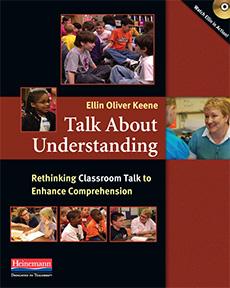
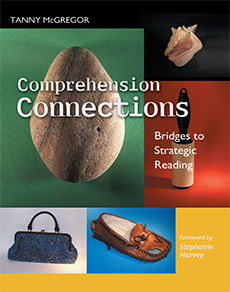
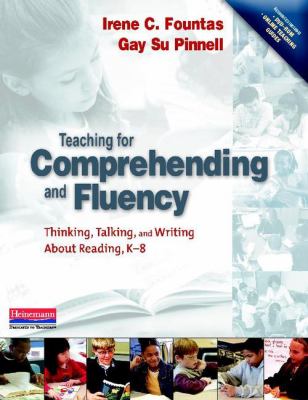
Comprehension: These are a Few of my Favorite Resources...

I have this crazy group of girlfriends who love to re-write song lyrics for special occasions.  So, when I started drafting this post in my head, I intended to re-write the lyrics to The Sound Of Music's famous number...  only to quickly realize that this post would never be published.  I can't re-write song lyrics (at least, not when I'm on a time table).  So instead, I'll just give you some of my favorite resources for teaching comprehension:


A Word About Persistence...

I learned a little bit more about persistence from my three year old.  When she is awake, my husband and I barely have opportunities to talk to one another.  She has this wonderful way of making noise that is one or two decibels louder than our conversation.  It's cute for about two nano-seconds...

On a recent work day morning, Luke and I were conversing with one another when Shea came into our bedroom saying, "Daddy, I want more books."  (As if the stack of books that she was already having trouble managing wasn't enough...that's a post for another day).  He quickly acknowledged her request by responding, "Shea, I'll get you more books as soon as Momma and I are done talking."  His acknowledgement was met with, "Daddy, I want more books."  After the 5th or 6th request was not fulfilled, she grabbed his face between her two little palms, looked him straight in the eyes and said, "I'm not giving up.  You don't understand...I want more books!"

What's the lesson in this?  When something is worth fighting for...fight for it!  

Let's apply this principle to the classroom.  When it comes to teaching and learning...what are you willing to fight for?  What are you willing to stand up and insist on?  In conversations that I have with teachers, I often hear that there is not enough time to fit it all in.  Well, that's true.  It has always been true.  It will always be true.  You can't add minutes to the clock.  So...instead of thinking about what you don't have time for, start to consider what you DO have time for.  Then, decide what you will MAKE time for.  

On the top of my list is reading books!  Persistence for getting her hands on more books worked for Shea.  Will it work for you?  MAKE time to read to your students everyday...MAKE time for them to read too!

Saturday, February 16, 2013

You know you're a literacy professional when...

In 2009, my husband and I found out we were expecting our first child.  What a feeling!  We decided early on that we did not want to find out our baby's gender until delivery day.  For some expecting parents this may pose the following problem:  How will I be able to create the perfect nursery?  For me, the answer was simple.  The alphabet is gender neutral, right?  And what else would you expect from a literacy specialist anyway?  


So, we decided to keep the room green (before becoming the nursery, it was our office).  First, we painted big white polka dots on the wall.  We have really high ceilings in the bedrooms of our home so we needed scaffolding to reach the top.  (Thank goodness my dad is a contractor!)


After that, we selected letters and colors.  We decided not to put the letters in the order of the alphabet.  Instead we chose random letters and fonts.  Some uppercase, some lowercase...you get the point.  


Before we were even expecting, Luke and I had settled on our names. If our baby was a girl, we would name her Shealagh (pronounced Shay-la).  If our baby was a boy, we would name him Cameron.  About halfway through the design project, we decided to hide the baby names in the letters on the wall.  S-H-E-A for Shealagh and C-A-M for Cam.  See if you can find them in the picture below.  


If we were talking about this project during the summer of 2009, this would be the end of my story...but that would be kind of boring, don't you think?

Fast forward to the spring of 2010.  I'm happily sitting in my daughter's nursery rocking her to sleep, when I notice something about the letters of the two hidden names.  I do a double take, a triple take.  Then, I laugh to myself.  How could I not have noticed this?  I couldn't have planned it on purpose if I tried!  The letters in the names 'Shea' and 'Cam' spell the word 'schema'.  


Can't you just picture this on the cover of a future book that I might write?  I am so passionate about building student background knowledge and I've done quite a bit of professional reading on the schema theory.  It only makes sense that my first child's room would literally have this important literacy topic painted on her wall!

You know you're a literacy professional when your work invades your personal life, without even meaning to!  I guess it makes the point that I strive to profess in my work...literacy is vital and it's everywhere.  Even in babies nurseries!

Guided Reading Survey

The kindergarten teachers in my district are just starting to implement Guided Reading in their classrooms.  As a way to support them during the implementation process, I created a  survey using Google Forms.  Once all of the teachers have completed the survey, the results will be compiled on a Google Spreadsheet.  What a simple and efficient way of gathering important professional development information.  See below for a copy of the form. You can also click on this link... http://tinyurl.com/KindergartenGuidedReading